


Zombie Rush: Idle Survival
DREAMWEAVE GAMES LIMITED
Zombie Rush: Idle Survival is the kind of arcade game I reach for when I want a quick burst of action without committing to a long session. Its basic appeal is easy to understand: zombies arrive, I tap to attack, and I try to stay alive long enough to turn a chaotic screen into a manageable one. That simplicity makes it approachable, but it also means the quality of each short session depends heavily on clear feedback, responsive controls, and a sensible way to recover when something goes wrong.
I spent time looking at it as more than a quick tap game. The important question is not only whether it can fill a few spare minutes, but whether it remains comfortable when played repeatedly, whether a new player can get moving without confusion, and whether interruptions are easy to handle. My overall impression is positive for casual arcade fans who enjoy compact zombie challenges. At the same time, players expecting a deep survival simulation or a highly developed action system may find its straightforward design limiting.
Getting into the first session without unnecessary friction
The game comes from DREAMWEAVE GAMES LIMITED and is listed as a free arcade title for Teen audiences. It has an average rating of 4.6 from around one thousand ratings, which suggests that its central idea is connecting with the people who want this particular style of play. It has also passed the hundred-thousand-install mark, so it is not an obscure experiment that only a handful of players have tried.
The first useful habit is to treat the opening session as a control check rather than immediately chasing the best possible result. I would begin by tapping at a comfortable pace and watching how quickly the game responds. In a game built around repeated taps, even a small feeling of delay can make the player blame the controls, the phone, or the connection. Testing the response early helps separate an actual gameplay challenge from a setup problem.
Players can sometimes get stuck because they approach the title as though every screen requires a complicated strategy. I found it more helpful to identify the basic rhythm first: observe the approaching threat, tap deliberately, and avoid turning every moment into frantic screen mashing. This is a small distinction, but it makes the game feel less tiring and gives the player a better sense of whether the challenge is asking for speed, timing, or simply persistence.
Related News






Another practical check is to play the opening minutes with the phone held in the position you normally use. A session that feels fine while the device is resting on a table may feel awkward when played one-handed on a bus or while waiting in a queue. Because the game is designed around direct tapping, hand position matters more than it would in an arcade title controlled mainly through swipes or virtual buttons. I would not judge the experience until I had tried it in the way I actually expect to play.
What to check before blaming the game
If the screen appears unresponsive, I would first close other demanding apps, make sure the device is not overheating, and relaunch the game. Those are ordinary steps, but they are especially relevant here because the main interaction is so simple. When the only expected action is tapping, a missed input is immediately noticeable. A clean restart can also reveal whether the issue was temporary rather than part of the game’s normal behavior.
The current version is 0.0.18, and that version label is worth keeping in mind when judging rough edges. A title at this stage may still feel less polished than a long-established arcade game. That does not automatically make it a bad choice, but it does change my expectations. I would keep the game updated through the normal platform store and avoid judging a single awkward session as proof that the whole experience is unreliable.
Gallery
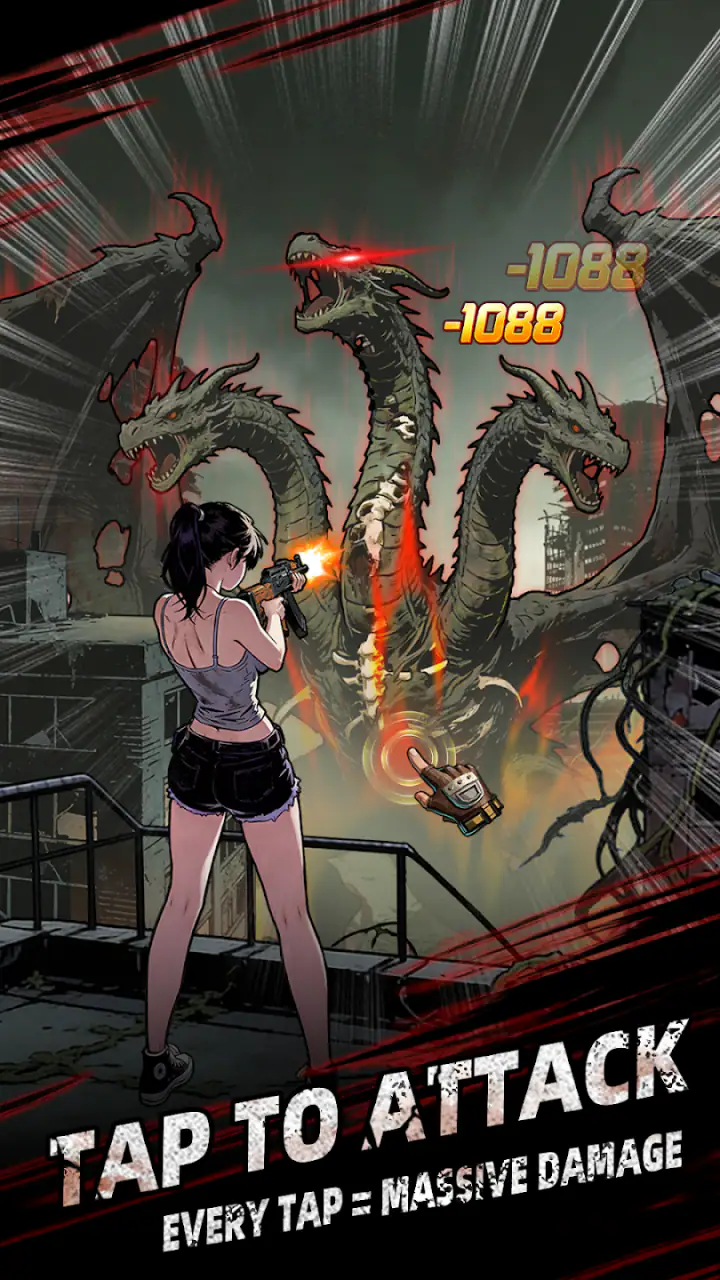
Storage and operating-system compatibility are also simple checks worth making before installation. The game supports Android 7.0 and later, so owners of older devices should confirm compatibility before spending time troubleshooting. On a supported phone, I would still leave enough free storage for normal app operation and avoid launching it immediately after a large system update if the device is already busy completing background tasks.
One non-obvious point is that tapping harder does not improve a tap-based game. It only increases hand fatigue and can make the phone shift in your grip. I get better results by using the pad of a finger with a steady rhythm and keeping the other hand available to stabilize the device. That approach is more useful during repeated sessions than trying to win through uncontrolled speed.
Recovering smoothly after an interrupted run
Short arcade games are often played in imperfect situations: a notification appears, someone calls, the player locks the screen, or the phone briefly loses focus. My preferred recovery workflow is simple. I pause mentally at the moment of interruption, return to the game, and check the screen before tapping again. That prevents an accidental tap from being treated as the first move of a new sequence or from wasting an opportunity immediately after returning.
If a run feels frozen after switching away, I would wait briefly before repeatedly tapping. Repeated input during a temporary slowdown can make it difficult to tell whether the game is responding late or not responding at all. If nothing changes, I would close and reopen it once rather than endlessly pressing the screen. This is safe, general troubleshooting, and it also protects the phone from unnecessary frustration.
For anyone playing during a commute or in a place with unreliable reception, I would start a session only when there is enough time to finish a small attempt. I would not assume that an interrupted run will always resume exactly as expected. The practical trade-off is clear: the game is suitable for short breaks, but a short break is not the same thing as a guaranteed interruption-proof session. If preserving every run matters to you, play when you can keep the screen active and avoid switching apps.
A useful workflow is to separate practice from progress. During the first few attempts, pay attention to how threats appear and how quickly your taps need to follow. Later, use the same comfortable rhythm instead of changing your technique every time the screen becomes busy. This helps identify whether a failed run came from a poor decision or from a missed input. It also stops the player from wasting time searching for a hidden control when the real answer is simply more consistent timing.
There is a second recovery lesson for players who use more than one device. I would not assume that progress, settings, or an interrupted session will appear identically on another phone unless the game clearly presents that option. Before changing devices, finish any run you care about and make a note of your current position. That is not a criticism of the game; it is a sensible precaution whenever a title’s cross-device behavior has not been made part of your normal routine.
When the phone, connection, or environment is the real problem
Not every poor session is caused by Zombie Rush. A crowded notification panel, aggressive battery saving, touch sensitivity problems, or a screen protector can all affect a game whose entire control scheme depends on accurate taps. If taps are missed in other apps too, I would inspect the phone rather than reinstalling the game immediately. Cleaning the screen, removing a bulky case that presses against the display, and testing without battery-saving restrictions can provide a clearer answer.
Heat is another factor that is easy to overlook. If the device becomes warm and the game begins to feel less responsive, I would stop for a few minutes and let the phone cool down. Playing while charging can add to that discomfort on some devices, particularly in a warm room. The practical choice is to use shorter sessions and give the phone breathing space instead of treating every slowdown as a challenge to push through.
Connection problems can also create confusion, even when the core action appears simple. If a screen takes longer than usual to load or behaves differently after the network changes, I would switch between a stable Wi-Fi connection and mobile data only as a test, then relaunch the game if needed. I would avoid repeatedly making purchases or tapping confirmation buttons while a screen appears stalled. The game is free to download, but its in-app purchases range from $0.99 to $99.99 per item, so patience is particularly important around any store-related screen.
That purchase range is one reason I would recommend setting a personal spending rule before handing the phone to a younger player. The Teen content rating describes the intended age group, but it does not replace family decisions about spending. I prefer to play the free portion first, decide whether the basic loop is genuinely enjoyable, and only then consider whether an optional purchase adds enough value for my own habits. Anyone who dislikes recurring temptation should be cautious, even if they never intend to buy anything.
Players who need strong accessibility controls should also evaluate the game in person rather than relying on its simple premise. A tap-focused interface may be easier than a game requiring several simultaneous gestures, but repeated tapping can still be uncomfortable for people with hand strain or limited dexterity. I would use shorter attempts, alternate fingers, and stop when the motion becomes tiring. If the design does not fit your physical needs, a slower arcade game with fewer repeated inputs would be a better choice.
How it compares with other arcade choices
Compared with a traditional level-based arcade game, this title feels more immediate because the player can focus on the central survival pressure without first learning a large control scheme. That makes it a good fit for someone who wants to open a game and understand the basic action quickly. It is also less demanding than a strategy-heavy zombie game where success depends on managing several resources, planning a base, or studying a large map.
The trade-off is depth. Players who enjoy carefully building a long-term strategy, collecting a wide range of equipment, or exploring a detailed world may prefer a more substantial survival game. Those alternatives usually ask for more time and attention, but they can offer stronger reasons to return beyond repeating the same core action. I would choose Zombie Rush for compact arcade sessions, not as a replacement for a full survival adventure.
It also differs from reflex games that rely on constant movement or rapid swiping. Here, the challenge is easier to understand physically, but repeated tapping can become monotonous sooner. My advice is to judge the loop by asking whether the act of improving your response feels satisfying on its own. If you need a changing soundtrack of mechanics to stay interested, this may be enjoyable in small doses but not as an all-day game.
The best everyday use case is a short waiting period: I can play a few attempts while waiting for an appointment, then put the phone away without needing to remember a complicated campaign. I would not choose it for a long flight if I wanted a deep offline-style activity, nor would I recommend it to someone looking for a narrative zombie experience. Its strength is convenience and directness, not breadth.
Who should try it and who should skip it
I would recommend the game to casual arcade players, zombie-theme fans who like simple interaction, and anyone who enjoys improving through repeated short attempts. It is particularly suitable for people who do not want to learn several systems before reaching the action. The free entry point makes it easy to test the central loop before deciding whether it deserves a regular place on the phone.
I would be more cautious with players who dislike repetition, have limited tolerance for in-app purchase prompts, or expect a polished, content-heavy survival simulator. The Teen rating also makes it a poor choice for parents seeking a game designed specifically for young children. In those cases, a calmer arcade title, a purchase-free game, or a deeper strategy alternative may better match the household’s expectations.
One of my strongest practical recommendations is to keep sessions intentional. Decide whether you are testing your timing, relaxing for a few minutes, or trying to beat a previous result. That small goal prevents the game from becoming an endless sequence of taps with no clear reason to continue. It also makes the limitations easier to accept because you are using the title for the kind of experience it actually provides.
After trying the basic loop, I would make a decision based on comfort rather than the rating alone. A 4.6 average is encouraging, and the number of installs shows that many people are willing to give it a chance, but neither figure can tell me whether the tapping rhythm suits my hands or whether the short-session format fits my routine. The most useful test is a few ordinary sessions on the device and in the environment where I plan to play.
My practical verdict
Zombie Rush: Idle Survival is best understood as a focused arcade time-filler, not a full-scale zombie survival world. I like its direct premise and the fact that I can get to the action without a long learning period. The game works when I want a compact challenge, especially during a spare moment when a larger game would feel excessive.
Its weaker side is equally clear: repeated tapping may lose its appeal, interruptions can require sensible recovery rather than blind repeated input, and the in-app purchase range means I would keep spending decisions deliberate. The early version number also encourages realistic expectations about polish. I would keep the game updated, test it on a cool and responsive device, and use short sessions to see whether the loop remains enjoyable.
For me, the final recommendation is a qualified yes. Download it if you want a free arcade game with a zombie theme, quick access to its main action, and a format that fits small gaps in the day. Skip it if you are searching for deep character development, extensive exploration, or a game that rewards long strategic planning. When approached on its own terms, it is an easy-to-understand tap challenge that can make waiting time more entertaining without demanding a major commitment.
FAQs for Zombie Rush: Idle Survival
What is Zombie Rush: Idle Survival?
Zombie Rush: Idle Survival is a mobile survival game that combines idle progression, zombie combat, and resource management. You build and improve a team of survivors, fight waves of undead enemies, collect rewards, and unlock stronger equipment and abilities. Because much of the progress can continue automatically, it is designed for players who enjoy short sessions as well as longer strategic play.
Can I play Zombie Rush: Idle Survival offline?
The game may allow some combat and progression features to continue without a constant internet connection, but online access is generally required for advertisements, cloud saving, events, purchases, updates, and certain reward systems. Offline availability can also vary between versions and devices. Before relying on offline play, it is worth launching the game with your connection disabled and checking which menus and modes remain accessible.
Does Zombie Rush: Idle Survival contain in-app purchases or advertisements?
Yes, players should expect optional in-app purchases and advertising in Zombie Rush: Idle Survival. Ads may be offered in exchange for extra rewards, faster progression, or additional resources, while purchases can provide currency, bundles, or other advantages. You can usually progress without spending money, although free players may need more patience and may encounter more frequent limitations.
Is Zombie Rush: Idle Survival suitable for children?
Zombie Rush: Idle Survival is primarily aimed at players who enjoy cartoon-style or action-oriented zombie games. Although the presentation may be less graphic than a realistic horror title, it still includes undead enemies, combat, weapons, and repeated fighting. Parents should also review the game’s age rating, advertising, chat or social features, and in-app purchase settings before allowing younger children to play.
What should I know about progression and gameplay before downloading?
Progression in Zombie Rush: Idle Survival depends on upgrading survivors, improving equipment, completing missions, and using collected resources efficiently. The idle system makes it possible to earn rewards without actively playing every moment, but advancing through tougher stages may require careful team development and repeated upgrades. Players who dislike grinding, waiting timers, or systems influenced by premium currency may find the later game less appealing.
Pros
- Simple idle gameplay that requires little time or attention.
- Offline progress helps you earn rewards while away from the game.
- Many survivors and weapons provide variety when building your team.
- Short missions make it easy to play during quick breaks.
- Cartoon-style visuals keep the zombie action light and accessible.
Cons
- Progress can slow considerably without upgrades or premium resources.
- Repeated missions may feel monotonous after extended play sessions.
- Random rewards can make obtaining specific survivors unpredictable.
- Frequent upgrade menus may feel overwhelming for new players.
- The game may consume noticeable battery during longer active sessions.


